



 June/2025
 Educational
Multi-Modal Learning: Why Storytelling Needs to Speak Every Child’s Language
Monisha Sami
Every child learns differently, and that is something to celebrate.
Some children find comfort in books, slowly tracing words and pictures. Others light up when they hear a story read aloud, letting the rhythm of language carry their imagination. Many are drawn to visual media, where songs, scenes, and characters on screen give stories a vivid, immediate life.
The variety is not random. It reflects the different ways children absorb information, connect with ideas, and express themselves. It also reflects how human learning has always been multimodal. Long before books and screens, stories were told orally, acted out, and illustrated on walls and objects. Children have always learned by seeing, hearing, and doing, often all at once.
Reading gives children the chance to slow down, build vocabulary, and imagine worlds from the inside out. Listening develops auditory skills and concentration, while also modelling tone, emotion, and resilience through the narrator’s voice. Watching adds visual cues like facial expressions and body language, which can be especially helpful for younger learners or those who rely on visual scaffolds to interpret social information.
These benefits are not just academic. They shape how children see themselves and others, which is why I often think about stories through the lens of behaviour and development. And together, these pathways reinforce one another. A child who hears a story might later recognise its words in print. A child who watches a character solve a problem might revisit the same challenge in a book or audio version, strengthening comprehension through repetition and variety.
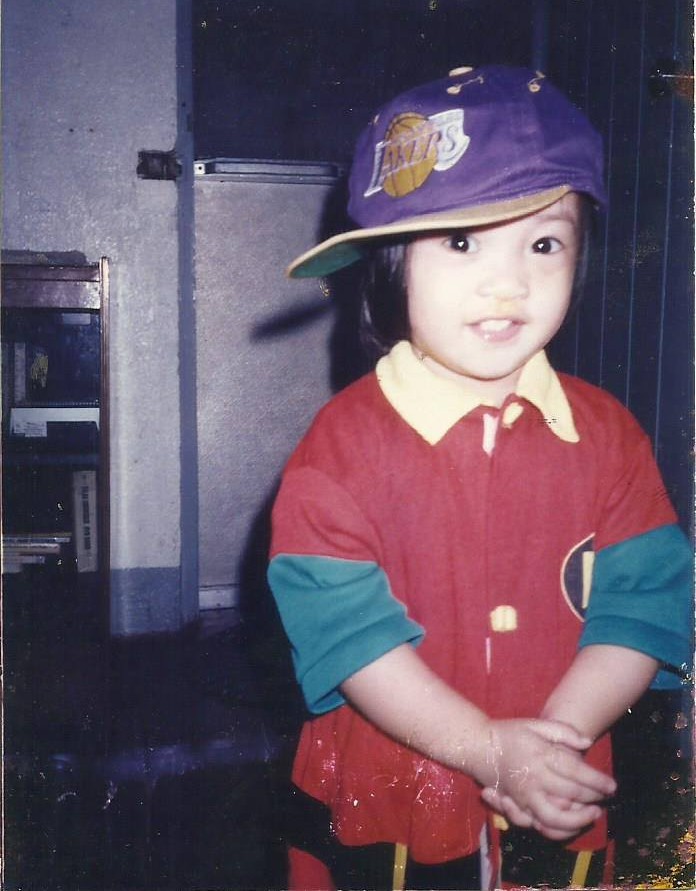
Carole (StoryCloud Audio Production Engineer)
Children learn by observing, imitating, and experimenting. Social learning theory shows us that their environments play a huge role in shaping behaviour. That is what makes stories so powerful: they offer models children can learn from and emulate, helping them practise values and behaviours in safe, meaningful ways.
When children see a character share, comfort a friend, or persist through difficulty, they are not just entertained. They are rehearsing behaviours and values they can later apply in their own lives. The more ways those models are presented, in print, in sound, in visuals, the more likely the lessons are to stick.
All of this becomes even more important when we think about the world children are growing up in now. From audiobooks and podcasts to picture books and video platforms, stories reach them in many forms whether we design for it or not. That means education cannot afford to be one-dimensional. If learning requires children to adapt to a single method, many will be left out. If we adapt learning to children, meeting them where they are, every child has a chance to connect.
This is not about choosing books over screens, or screens over sound. It is about recognising that each child deserves multiple pathways into a story, and that those pathways can reinforce one another. The goal is not simply to transfer knowledge, but to nurture empathy, resilience, curiosity, and connection.
When stories speak every child’s language, they become more than lessons. They become mirrors that reflect belonging and windows that open onto new perspectives. They invite children not only to learn but also to imagine the kind of people they want to be.
And for parents and educators, the outcome is visible in the quiet moments, when a child repeats a line they have heard, acts out kindness in play, or recognises an emotion on a character’s face. These moments remind us that stories are not only about the present. They are seeds planted for the future, shaping children to carry empathy, curiosity, and care into the world.




 Wed Oct 01 2025
 Mission







 Crafted byD'Vinci
 Technology
 Network