



 December/2025
 Learning
Supporting Safe and Equitable Digital Learning: How StoryCloud’s Foundations Align with Australia’s National Child Safety and Device Reforms
StoryCloud Team
Australia is entering the most significant period of early learning reform since the National Quality Framework was introduced more than 15 years ago. National and state changes are reshaping how services must supervise, govern, and document the use of digital technologies with children. Many of these reforms centre on child safety, transparency, and the expectation that early learning environments actively manage the digital tools children encounter day to day.
These shifts reflect challenges that educators, children, and families have been navigating for a long time. Access to technology has never been evenly distributed, and some children enter care with regular access to digital learning tools, while others experience very little exposure. Educators have been balancing the potential benefits of digital learning with the practical difficulties of supervising devices, ensuring safety, and managing the technical side of technology without the infrastructure that is common in a child’s later schooling years. Centres have needed ways to introduce digital experiences without creating new operational burdens.
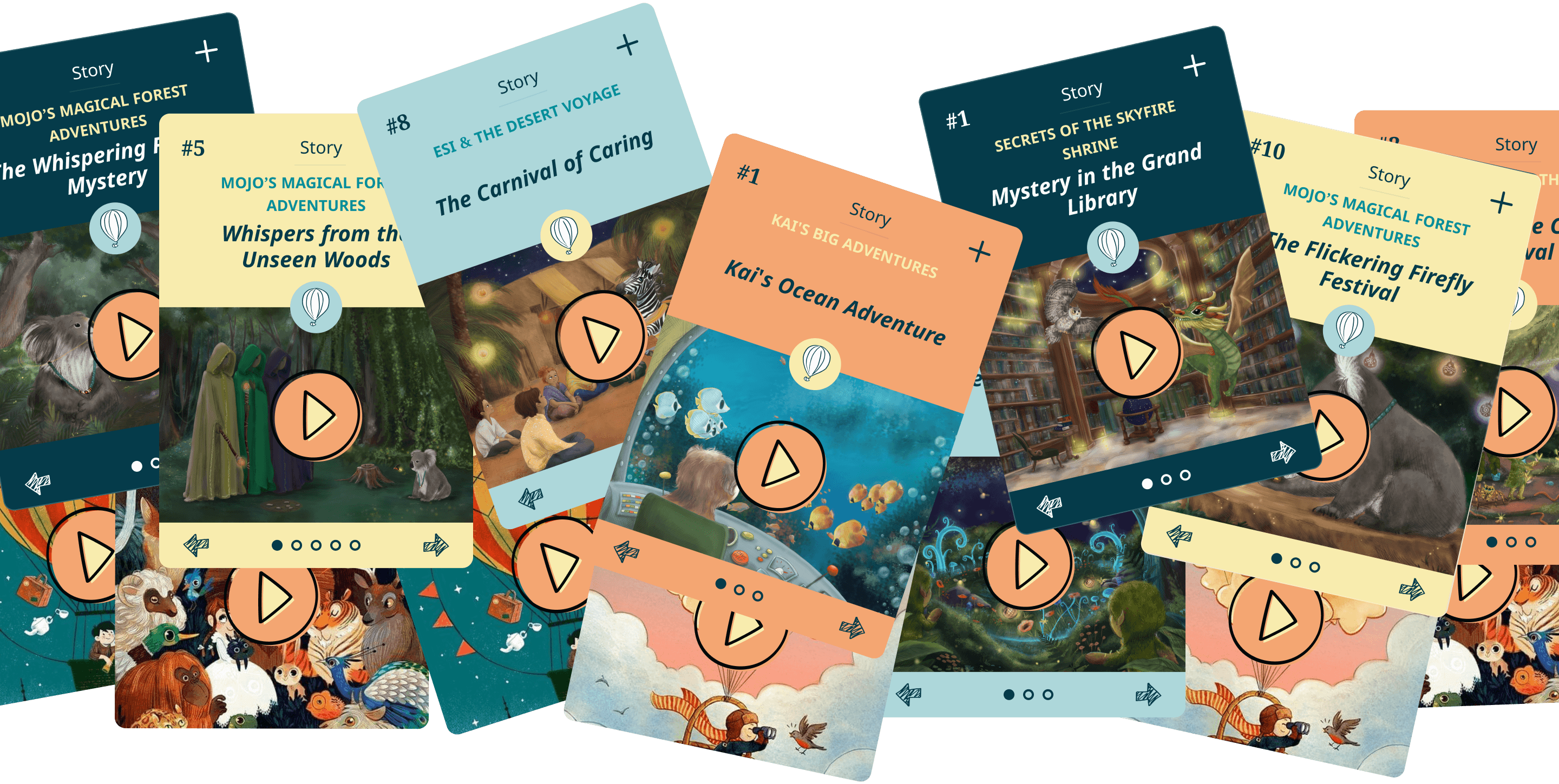
Before these reforms took shape, StoryCloud was designed with these realities in mind. The intention was not to create a compliance product, but to address longstanding issues around equity, access, and safety. The aim was to offer a secure, structured digital environment that children could engage with regardless of their circumstances at home, and to provide educators with tools that supported learning without increasing workload or technical administration. The curated digital environment was built to be locked down and developmentally appropriate, with learning experiences that support privacy, emotional safety, and EYLF outcomes. Our curated, screen-free learning print packs were created with the same philosophy, offering play-based activities that reinforce the language, cognitive, and social skills introduced in digital stories, providing children with varied entry points into learning. Kids Mode and Parent Mode within the app offer structure, transparency, and flexibility, ensuring that digital use remains safe, intentional, and responsive to individual needs.
The recent policy shifts give clearer structure to expectations that were already emerging. The September 2025 National Quality Framework (NQF) reforms introduced national requirements for early learning services to implement formal policies governing the safe use of digital technologies. This is the first time digital devices are formally being recognised within the compliance framework. Commencing 1 January 2026, child safety will be explicitly embedded into Quality Areas 2 and 7 through the updated NQS.

Gabriele (StoryCloud Audio Production Engineer)
At the state level, the Education and Care Services (Supply, Authorisation and Use of Devices) Order 2025, which commenced in NSW on 6 November 2025, has set expectations that services must tightly govern which devices are used with children, who uses them, and for what purpose. Similar expectations are rolling out across other jurisdictions through the NQF, and these reforms mean that digital governance is no longer treated as an operational detail, but as a core component of quality and compliance.
Services have responded quickly across NSW, Victoria, and South Australia, with many centres attempting to move away from personal devices virtually overnight, creating a surge in retail iPad and tablet purchases. However, without structured guidance, some services have inadvertently created new risks, purchasing devices without management systems, without MDM profiles, and without the implementing policies required to meet the new standards. This has added operational cost and complexity at a time when expectations around safety and documentation have increased dramatically.
In contrast, StoryCloud provides a convenient, turnkey, managed device ecosystem that introduces structure without adding pressure to educators, as these devices arrive pre-configured, with child safety settings, and ready to use. This removes the need for centres to develop systems from scratch or troubleshoot across changing rosters. The combination of structured digital experiences and screen-free learning supports children across multiple developmental domains and complements the work educators are already doing in their programs.
These early learning policy reforms are reshaping expectations across the sector, but the underlying principles remain familiar. Fairness, safety and child-centred design have always been part of high-quality early learning. The legislation simply brings these principles to the forefront, making digital governance, intentional digital practice, and structured technology use a visible and required element of service quality.
At StoryCloud, we see these reforms as the moment where the digitisation of early learning stops being optional. We believe that what begins as safer, educator-led device use will naturally grow into structured, program-driven digital learning where screen time is purposeful rather than passive, and sits alongside play, language, and social exploration. We are already seeing small pockets of this shift, with iPads used as intentional learning tools instead of ad-hoc gadgets, and our view is that the sector will increasingly move toward safer digital environments, lower device-to-kid ratios, and more deliberate in-session digital learning for young children.




 Wed Oct 01 2025
 Mission









 Crafted byD'Vinci
 Technology
 Network